
SAFARI DATES, DETAILS & COST
WHY YOU’D LOVE IT!
Cape Buffalo hunt in Zimbabwe & photo safari combo!
Hunting a Cape buffalo in Zimbabwe is widely regarded as one of Africa’s most authentic and rewarding big-game experiences, combining classic wilderness, exceptional tracking, and deeply ethical fair-chase hunting. Zimbabwe’s vast concessions, highly skilled professional hunters, and strong conservation framework create ideal conditions for a challenging, on-foot pursuit that demands patience, respect, and skill. The experience is about far more than the animal itself — it’s the intensity of reading tracks in the sand, feeling the raw presence of the bush, and earning a trophy through a time-honored tradition that directly supports wildlife conservation and local communities.
Visiting Victoria Falls is a truly awe-inspiring experience, where the sheer power and beauty of one of the world’s greatest waterfalls leaves a lasting impression. Known locally as The Smoke That Thunders, the falls combine dramatic scenery, thundering water, rainbows in the mist, and a vibrant natural setting — making it a perfect blend of wonder, adventure, and timeless African magic.
Mana Pools National Park offers one of Africa’s most intimate and soulful safari experiences, where wildlife moves freely through open floodplains along the Zambezi River and encounters feel wonderfully unfiltered. Known for its legendary walking safaris and relaxed animal behavior, Mana Pools allows you to experience Africa on foot, at eye level, in a pristine wilderness that feels timeless, raw, and deeply connected to nature.
A truly astonishing safari adventure, filled with magical experiences that you won’t find anywhere else in the world!
MAP
 DAILY
Itinerary at a glance
◽️ DAY 0 | Travel
Departure
◽️ DAY 1 | South Africa
Johannesburg arrival
◽️ DAY 2-3 | South Africa
Timbavati G/Reserve
◽️ DAY 4-13 | South Africa
Cape Buffalo Hunting
◽️ DAY 14-16 | South Africa
Timbavati G/Reserve
◽️ DAY 17 | Return
Departure
 MAP
Visualize your journey!
DAY 0 | Travel
DEPARTURE
Travel
 DEPARTURE
Your adventure starts now!
Embark on an African safari and anticipate breathtaking landscapes, encountering diverse and majestic wildlife in their natural habitats, and immersing yourself in the rich cultural experiences of the continent.
* See your safari itinerary for transfer logistics
DAY 1 | Arrival in South Africa
JOHANNESBURG
Overnight
📍Protea Hotel OR Tambo Transit
 PROTEA HOTEL OR Tambo TRANSIT
Overview
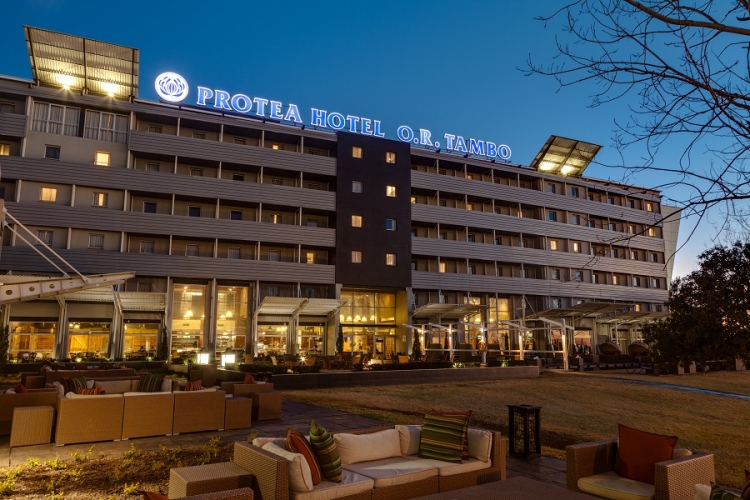
Protea Hotel by Marriott O.R. Tambo Airport Transit – located inside Terminal A in the international departures transit area, behind immigration, and only accessible to passengers connecting between international flights.
 Bed & Breakfast | Wifi available
B&B
HOTEL
OVERNIGHT
DAY 2-3 | Victoria Falls
VICTORIA FALLS
Explore
📍 Old Drift Lodge
 VICTORIA FALLS
Victoria Falls is the 7th wonder of the world! Located in Zimbabwe, situated in the heart of Southern Africa and entirely landlocked. 12% of its land is allocated to National Parks and Game Reserves.
Undoubtedly, the country's most iconic attraction is the awe-inspiring Victoria Falls, the largest waterfall in the world, locally known as Mosi-oa-Tunya, or the "Smoke That Thunders" because of the spray made by the mass of water dropping 100 meters below in the gorges. Victoria Falls is twice the size of Niagara Falls and stretches across a significantly longer distance. Visitors can get up close to the falls, but be prepared to experience some splashing.
The Victoria Falls, now in it's 150 millionth fantastic year, - its zenith in about May each year. It’s a truly awe-inspiring experience—the sight, the sound, the smell—and the humbling feeling that this is indeed nature's supreme masterpiece. No photograph can begin to depict reality. And nothing prepares you for your first sight. .
The Victoria Falls present a spectacular sight of awe-inspiring beauty and grandeur on the Zambezi River, forming the border between Zambia and Zimbabwe—the largest sheet of falling water in the world and significant worldwide for its exceptional geological and geomorphological features and active land formation processes with outstanding beauty attributed to the falls, i.e., the spray, mist, and rainbows.
David Livingstone was the first European to see the Victoria Falls in 1855. The Scottish explorer is believed to have been the first European to view the falls, and he named them Victoria Falls in honor of Queen Victoria.
While in Victoria Falls, don't miss the opportunity to enjoy a delightful cruise on the Zambezi River for a different perspective of the falls, especially during sunset. You can also opt for a thrilling helicopter ride over the falls. For a unique experience, consider having afternoon tea at the classic Victoria Falls Hotel. Additionally, if you're interested in shopping, Victoria Falls is an excellent place to purchase local souvenirs, artwork, and handcrafted carvings.
OLD DRIFT LODGE
Lodge Overview
Full board, excl. premium drinks.
Lying just 4 miles from the rumble of the mighty Victoria Falls, this extraordinary luxury tented lodge on the banks of the Zambezi River is a bush paradise that exudes an old world charm, admits modern luxuries
Upstream of the iconic Victoria Falls in the Zambezi National Park lies a pristine piece of land on the banks of the Zambezi River. Nestled within this wild paradise is Old Drift Lodge, a place frequented by elephant, buffalo, zebra, giraffe, Lion and many other animals. The untouched natural beauty of the park is sprawled over 56 000 breath taking hectares.
The Lodge speaks to the rich heritage of the area. A ‘drift or ‘ford’, is a shallow place in a river or stream where it is possible to cross safely without using a boat. Around 1898, the lodge location (originally known as Sekute's Drift) was used as a crossing point over the Zambezi River between what was then Southern and Northern Rhodesia (today Zimbabwe and Zambia). The drift was at a point on the river, 3 miles above the Falls, where the river is wide but runs low enough during certain periods for safe crossing.
The Lodge offers luxury accommodation, with each air-conditioned suite decorated with stylish furnishings, fitting of the bygone eras, which blend in seamlessly with the natural environment. The spacious canvas en-suite rooms all have a private lounge, indoor and outdoor showers, plunge pool and an outdoor bath overlooking the Zambezi.The main lodge area will have 360 degree views, north facing onto the Zambezi & south facing onto a water hole.
ACTIVITIES
The activities offered at the lodge emphasize the rich natural environment, focusing on the abundance of wildlife that roam through the Park and swim the Zambezi River. The Zambezi National park can be explored by road, river or on foot, satisfying guests needs to experience every aspect of this natural utopia.Due to its close proximity to Victoria Falls, you have ample opportunity to enjoy a vast array of activities – from the adrenaline fuelled bunji jumping, canyon swinging and white water rafting to the more sedate historical tours, river cruises and much more.
*A warm welcome awaits on arrival at the airport! Please be on the lookout for your driver with your name sign. Baggage assistance followed by a 20 mins. road transfer to your accommodation.
This afternoon, get a view from above! Take to the sky for a thrilling 15 minute helicopter flip over the breath-taking Victoria Falls and surrounding area. Tonight , enjoy the perfect start to your visit in Zimbabwe - a sunset cruise on the mighty Zambezi River. The sunset cruise offers a unique way to explore the channels of the river and to get an up-close view of the pristine wilderness and African game along its banks. Canapés & a full bar available (drinks at own cost)
* See your safari itinerary for transfer logistics
.
FULL BOARD
TENTED CAMP
TOURS
DAY 2-6 | Hunting
HUNTING
Cape Buffalo hunt
📍Makuti or Matesti Camp
ZIMBABWE HUNTING
Accommodation
MAKUTI CAMP
Hunting days
Overview
Makuti Safari Area offers classic, untamed Africa in one of Zimbabwe’s most renowned dangerous game regions. Set along the dramatic Zambezi Escarpment in north-western Zimbabwe, the area is known for exceptional hunting of Cape buffalo, elephant, and leopard. Large buffalo herds, resident elephant populations, and well-established leopard thrive in the thick jesse, riverine habitat, and rugged escarpment terrain.
Covering approximately 225,000 acres of unfenced wilderness within the greater Zambezi ecosystem near Mana Pools, Makuti provides an authentic, free-range hunting experience with abundant wildlife and ideal conditions for tracking dangerous game on foot in truly wild surroundings.
Matetsi Camp: North Matabeleland offers one of Southern Africa’s most electrifying hunting environments, with over one million acres of unfenced wilderness stretching toward the Zambezi River.
The terrain ranges from deep Kalahari sands and granite kopjes to open grasslands and dense riverine systems along the Matetsi, Gwayi, Lukosi, Nyantue, and Shangani rivers — creating diverse, challenging hunting conditions at every turn.
A typical day of hunting begins by waking up before sunrise and gathering for breakfast and coffee. Following this, the hunting party leaves the camp in vehicles to engage in spotting and stalking for the day. The hunting activity continues until mid-day, at which point everyone returns to the lodge for lunch and a break.
After a brief rest or siesta, the afternoon hunt commences. For those exploring remote areas, packing a lunch is likely. At the end of a successful day of hunting, participants convene at the campfire to share their experiences. A delightful dinner is served once all hunters have returned, and many choose to unwind by the fireplace with post-dinner drinks before retiring for the night in preparation for the next day's hunt.
Makuti Safari Area offers classic, untamed Africa in one of Zimbabwe’s most renowned dangerous game regions. Set along the dramatic Zambezi Escarpment in north-western Zimbabwe, the area is known for exceptional hunting of Cape buffalo, elephant, and leopard. Large buffalo herds, resident elephant populations, and well-established leopard thrive in the thick jesse, riverine habitat, and rugged escarpment terrain.
Covering approximately 225,000 acres of unfenced wilderness within the greater Zambezi ecosystem near Mana Pools, Makuti provides an authentic, free-range hunting experience with abundant wildlife and ideal conditions for tracking dangerous game on foot in truly wild surroundings.
MATETSI CAMP
FULL BOARD
LODGE
HUNT
DAY 14-16 | Mana Pools
MANA POOLS NP
Experience
📍Nyamatusi Camp
 MANA POOLS NP
Area Overview
Mana Pools National Park is a remote, UNESCO World Heritage Site located in northern Zimbabwe along the Zambezi River, near the border with Zambia. The park covers approximately 2,196 square kilometers (848 sq mi) and is renowned for its dramatic landscapes, abundant wildlife, and exceptional safari experiences.
"Mana" means "four" in the local Shona language, referring to the four large permanent pools—Green Pool, Chinasiko, Chine, and Long Pool—that were formed by ancient meanders of the Zambezi River.
The park hosts one of Africa’s highest concentrations of elephants, buffalo, hippos, crocodiles, and predators like lions, leopards, cheetahs, and wild dogs. Over 450 bird species have been recorded, making it a premier destination for birdwatching.
Famous for unique walking and canoe safaris, visitors can explore the floodplains, river channels, and forests of acacia, mahogany, fig, and baobab trees. The dry season (May to October) is ideal for wildlife viewing, as animals gather around the permanent water sources.
Situated in the Lower Zambezi Valley, the park is contiguous with Zambia’s Lower Zambezi National Park across the river and is part of a larger conservation area that includes the Sapi and Chewore Safari Areas
Designated a UNESCO World Heritage Site in 1984 and a Ramsar wetland of international importance in 2013, the park remains one of the last true wilderness areas in Africa. However, it faces threats from proposed oil and gas exploration nearby and potential future hydroelectric projects.
Safari Days!
A typical day on Safari in Africa! Each day on safari in Africa is a magical experience, whether you’re exploring the savanna on foot or in a 4x4 vehicle in search of the Big 5 or taking to the sky in a hot-air balloon to witness the Great Wildebeest Migration. Every single day is steeped in the promise of a unique adventure and cherished memories.
Although each day is unpredictable to a certain extent, based on the time of year or location, there is a general format or schedule that safaris tend to follow, but, as a rule, safaris do follow a familiar rhythm that combines thrilling game viewing with ample time to relax in between—a dream vacation in anyone’s book. One rule of thumb is that there are usually two game drives a day: one in the early morning and one in the late afternoon, when animals are at their most active.
| ||||||||||||||||||||
 NYAMATUSI CAMP
Camp Overview
 Full board excl. premium drinks
Nyamatusi Camp is nestled on the banks of the mighty Zambezi River within the remote eastern region of Mana Pools National Park, a UNESCO World Heritage Site in Zimbabwe. Situated in the Nyamatusi Wilderness Concession, the camp enjoys a pristine and secluded location shaded by ancient mahogany and sausage trees, offering uninterrupted views of the river and the escarpment beyond. This seasonal luxury camp operates from April to November, taking advantage of the dry season when wildlife congregates around remaining water sources. Access is via a road transfer from the local airstrip, enhancing its sense of isolation and immersion in the wild.
Dining at Nyamatusi Camp follows the classic rhythm of an African safari, blending gourmet flavors with bush ambiance. Guests enjoy morning refreshments during game drives, followed by brunch or lunch back at camp. Late afternoon brings high tea before the final safari activity, culminating in sundowners enjoyed in the wilderness—a signature moment under the African sky. Back at the lodge, multi-course dinners are served in the elegant dining area or as private experiences in the sunken wine cellar, featuring fine wines curated from an expertly stocked cellar. The culinary highlight for many guests is the camp’s renowned banana banoffee pie, praised as exceptional by visitors.
The camp features just six spacious tented suites, ensuring privacy and exclusivity, each thoughtfully designed to blend luxury with nature. Every suite includes air conditioning, a mini-bar, tea-and-coffee station, safe, and both indoor and outdoor showers with flush toilets and twin basins. A highlight is the private plunge pool on each deck, perfect for cooling off while watching wildlife pass by. The main lodge is a two-story thatched structure housing a lounge, bar, dining area, library, communal splash pool, and a unique sunken wine cellar. Powered entirely by solar energy, the camp maintains high comfort standards while prioritizing sustainability.
Guests at Nyamatusi Camp can enjoy a diverse range of expertly guided activities, including game drives, walking safaris, canoeing, catch-and-release fishing, and birding excursions. The concession is home to four of the Big Five—lion, leopard, elephant, and buffalo—with frequent sightings of cheetah, hyena, wild dog, zebra, and numerous antelope species. Walking safaris offer intimate encounters with nature, while canoe trips provide close-up views of hippos and crocodiles along the Zambezi. Children aged 7–11 are welcome and can participate in nature walks, while those 16 and older may join walking safaris. All activities are included in the stay, led by knowledgeable guides passionate about sharing the wonders of the bush.
DAY 11 | Departure
RETURN
DEPARTURE
Unfortunately, all good things must come to an end! Goodbye to the safari life, feeling relaxed, mesmerizing scenery, great food, family time, and romantic memories.
Morning road transfer back to the airport for your outbound flight... dreaming of the trip of a lifetime!
IMPORTANT INFO TO TAKE NOTE OF
Please refer to 👉 FAQ's for all related travel information
- IN & EXCLUDED
- PASSPORTS
- BLANK VISA PAGE REQUIREMENTS
- VISAS
- HEALTH
- CONNECT
- HEALTH
- PACKING LIST
- GRATUITIES
- CONTACT
- TRAVEL INSURANCE
- POWER
- SAFETY
- BAGGAGE
INCLUDED
- Experience of a lifetime
- 24/7 support before & during your safari
- Accommodation
- Road transfers
- Tours & Activities
- Meals & Drinks
- Tour Guide (where applicable)
- Airport & airstrip transfers
- Park fees, levies & taxes (unless otherwise indicated)
- Inter-Africa commercial & light aircraft flights
____________
* As indicated on your detailed safari itinerary
EXCLUDED
- International airfare
- Personal gifts & purchases
- Incidental charges
- Travel insurance
- Conservation fees*
- Visa fees
- Balloon safari* (if applicable)
- Laundry*
- Tips
____________
* Unless otherwise indicated on your itinerary
Due to constantly changing requirements, it is recommended that travelers contact the appropriate embassy for accurate and up-to-date information & requirements
Please refer to https://travel.state.gov/content/travel.html for updated information on each country.
Passport & Visa requirements are guest’s sole responsibility*
- Expiration date valid at least 6 months past return dates
- Please check the number of blank Visa pages required by each country.Passport MUST have AT LEAST 2-3 blank “VISAS pages” per entry – the word “VISAS” must appear at the top of the page to be considered a “Visas Page” . They must be consecutive and blank back and front. Please note the 6 pages required for NAMIBIA!
- Airlines will refuse board if you do not meet this requirement. Please click to view more info on this link
- Please note special requirements when travelling with a minor(s)
The table below shows the number of blank visa pages required by each country.
- If you plan to visit multiple countries during the same trip, you need to add the requirements for each country together.
- If your passport does not have a sufficient number of blank pages, you will need to replace it before your trip.
- It is no longer possible to add visa pages to a passport. You must apply for a new passport.
Botswana 3 blank pages (3 or more unused pages; one blank page per entry)
Kenya 2
Mozambique 3
Namibia 3
Rwanda 1
South Africa 2 (2 Consecutive blank Visa Pages: South Africa requires travelers to have 2 consecutive completely blank visa pages in their passports upon every arrival in South Africa. YOU WILL BE DENIED ENTRY if you do not have 2 consecutive blank visa pages in your passport. This does not include the endorsement pages.
Tanzania 2
Uganda 1
Zambia 3
Zimbabwe 3
(All visitors to Zimbabwe need to present a valid passport, return transportation ticket, sufficient funds and at least 3 blank visa pages for entry and exit stamps.
How Many Blank Pages Are Required by Each Country?
- Many countries have a specific travel regulation for the number of blank passport pages visitors should have. This is to allow space for visas and visa stamps.
- Before embarking on an international trip, it is important to check your destination’s passport requirements to ensure that you meet them.
- Having a certain number of blank passport pages is a mandatory rule for some territories, along with any necessary travel documents such as an eVisa or Travel Health Certificate.
- Each border authority has its own passport requirements for travelers. The number of compulsory blank pages depends on the individual territory.
- Countries such as the United Kingdom, Canada, and Morocco only require visitors to have 1 blank page to enter.
- Others, for example Germany, India, and South Africa, follow a 2-page regulation.
- Some African destinations need at least 3 blank pages, such as Botswana, Mozambique, and Zambia.
- There are even some territories, including Brunei and Namibia, that demand a minimum of 6 empty passport pages.
- If you fail to meet these requirements, you could be refused permission to board by an airline or refused entry at border control.
What if I am visiting multiple countries?
- If a trip consists of visiting multiple countries, it is necessary to add the requirements of each country together.
- For example, if you are traveling to somewhere that requires 1 page, then continuing to somewhere that requires 2, you will need to have a total of 3 empty passport pages.
Can I Add Passport Pages?
- Most countries do not allow passport holders to add pages. The United States, for example, previously provided this service but no longer do. The same applies for the UK.
- In most cases, it is necessary to apply for a new passport if there are no more blank pages left.
- You can contact your destination’s embassy or consulate if you are unsure about passport page requirements.
👉 Visa
No visa required for USA Citizens for:
- South Africa, Botswana, & Zambia
Visa required for USA Citizens for:
- Zimbabwe: Buy at port of entry ($ 50 cash US Dollar bills)
- Kenya,Tanzania & Uganda: Applied for online prior to travel!
- Namibia: Approx. $110 / NAD 1,700 and must be purchased online prior to travel
Visa requirements differ from country to country and, on occasion, are subject to change with no warning.
- USA: US$50
- Britain / UK / Ireland: US$70
- Canadian:US$75
- On arrival please ensure you request the correct visa for your needs
- Always check your visa has been issued for the correct number of days
- Zimbabwe, KAZA UniVisa and Mozambique visas each use a full passport visa page
- Carry the exact amount of cash to pay for your visa as credit card machines may be offline and change is not always available
👉 Health
Prior to traveling to Africa, we highly recommend you visit a medical professional such as your doctor or local travel clinic for advice on what health precautions need to be taken. This visit should take place at least 4-8 weeks prior to departure as it will determine the need for any vaccinations and/or antimalarial medication as well as identifying any other medical precautions.
- Currently no mandatory vaccinations are required when entering Botswana, Zambia, Zimbabwe, Mozambique and South Africa.
- Yellow fever vaccination certificate is required by visitors coming from a country where yellow fever occurs, or if they have been in transit for more than 12 hours at an airport in a country here yellow fever occurs. Applicable to Kenya, Tanzania & Uganda.
- Malaria prophylaxis medication is recommended when traveling to Zimbabwe, Botswana, Zambia, Kenya, Tanzania, Uganda and in certain areas of South Africa.
Insider Tips
- Take out comprehensive travel insurance to safeguard against the unexpected. Should you fall ill or have an accident when staying in a remote area you may have to be evacuated by air to a private medical facility which is a costly exercise.
- Carry the name and contact details of your doctor together with information pertaining to any medical condition and its treatment.
- If you take prescription medication ensure you carry sufficient to last the duration of your trip, plus a little extra in case of flight delays.
- Prescription medication should be kept in its original container which should be clearly labelled.
- More unusual drugs and ones that contain sedatives should be carried with a medical attestation signed by a physician certifying the traveler requires the medication for a specific medical condition.
- Ask you medical practitioner to recommend items for a basic first aid kit
- In the event your checked bag is lost or delayed we recommend you carry prescription medication including anti-malaria tablets, spare contact lens and essential toiletries in your hand luggage.
- If you travel with a CPAP machine, please advise us well in advance so we can check your chosen safari lodges/camps are able to run a generator throughout the night. Alternatively, you may choose to carry a portable battery pack that can be re-charged daily.
- Please advise us of any special dietary requests in advance of travel.
IMPORTANT: Please install the WHATSAPP app on your phone and set up the account –it is all free! This is the preferred method to stay in contact during your safari, just in case you have a question—you never know!
Once the app is downloaded, please add my contact number: +1 949 400 5262. You should see me listed as "KARI | AfricaPhotoSafaris" and the please send me a quick message just so I know we are connected.
👉 Health
Prior to traveling to Africa, we highly recommend you visit a medical professional such as your doctor or local travel clinic for advice on what health precautions need to be taken. This visit should take place at least 4-8 weeks prior to departure as it will determine the need for any vaccinations and/or antimalarial medication as well as identifying any other medical precautions.
- Currently no mandatory vaccinations are required when entering Botswana, Zambia, Zimbabwe, Mozambique and South Africa.
- Yellow fever vaccination certificate is required by visitors coming from a country where yellow fever occurs, or if they have been in transit for more than 12 hours at an airport in a country here yellow fever occurs. Applicable to Kenya, Tanzania & Uganda.
- Malaria prophylaxis medication is recommended when traveling to Zimbabwe, Botswana, Zambia, Kenya, Tanzania, Uganda and in certain areas of South Africa.
Insider Tips
- Take out comprehensive travel insurance to safeguard against the unexpected. Should you fall ill or have an accident when staying in a remote area you may have to be evacuated by air to a private medical facility which is a costly exercise.
- Carry the name and contact details of your doctor together with information pertaining to any medical condition and its treatment.
- If you take prescription medication ensure you carry sufficient to last the duration of your trip, plus a little extra in case of flight delays.
- Prescription medication should be kept in its original container which should be clearly labelled.
- More unusual drugs and ones that contain sedatives should be carried with a medical attestation signed by a physician certifying the traveler requires the medication for a specific medical condition.
- Ask you medical practitioner to recommend items for a basic first aid kit
- In the event your checked bag is lost or delayed we recommend you carry prescription medication including anti-malaria tablets, spare contact lens and essential toiletries in your hand luggage.
- If you travel with a CPAP machine, please advise us well in advance so we can check your chosen safari lodges/camps are able to run a generator throughout the night. Alternatively, you may choose to carry a portable battery pack that can be re-charged daily.
- Please advise us of any special dietary requests in advance of travel.
- In the event your checked bag is lost or delayed we recommend you carry prescription medication including anti-malaria tablets, spare contact lenses, essential toiletries, and a change of underwear in your hand luggage.
- If you take prescription medication ensure you carry sufficient to last your whole trip, plus a little extra in case of delays. Prescription medications should be in their original containers with the doctor’s prescription printed on the container.
- Leave expensive and sentimental pieces of jewellery at home and never carry jewellery in your checked baggage.
IMPORTANT: Please install the WHATSAPP app on your phone and set up the account –it is all free! This is the preferred method to stay in contact during your safari, just in case you have a question—you never know!
Once the app is downloaded, please add my contact number: +1 949 400 5262. You should see me listed as "KARI: AfricaPhotoSafaris" and the please send me a quick message just so I know we are connected.
- Don’t tempt fate by traveling with expensive jewelry, only bring what you need. If its irreplaceable or has sentimental value, then leave it at home. Never carry jewelry in your checked baggage.
- In the unfortunate event your checked baggage is lost or delay we recommend you carry prescription medication, including anti-malaria tablets, essential toiletries, and a change of underwear in your hand luggage.
- Misplacing or losing original travel documents is frustrating and time consuming as it takes time to have them replaced. Always carry a copy of the ID page of your passport, travel itinerary, and travel insurance with you. The best method is to scan these documents and store them electronically. Packing a copy separately from the original documents and leave a copy with a family member or trusted contact are other options.
- It is advisable to secure your luggage with a suitable lock when flying both locally (within South Africa), regionally (to neighboring countries), and internationally.
- Please do not check in any valuables or chronic medication as these should be kept in your carry-on luggage
- Always drive with your doors locked and your windows closed, with handbags/backpacks/parcels, and valuables stored out of sight in the boot/trunk of the car.
- Keep mobile phones, wallets, and cameras well hidden, and avoid wearing expensive jewelry.
- Never leave your luggage unattended (e.g. do not leave handbags under tables, on the backs of chairs, or restroom hooks).
- Separate your cash and credit cards and do not carry all your cash with you.
- Avoid counting cash in the open.
- Be vigilant whenever approaching an automated bank teller machine (ATM). If you feel unsafe, rather return at another time or use an alternate machine.
- Please store any valuables, travel documents (passports/airline tickets/vaccination cards), and additional cash in your camp/lodge/hotel room safe or the property's main safe. Keep your room locked at all times and hand in room keys or cards whenever you leave your hotel.